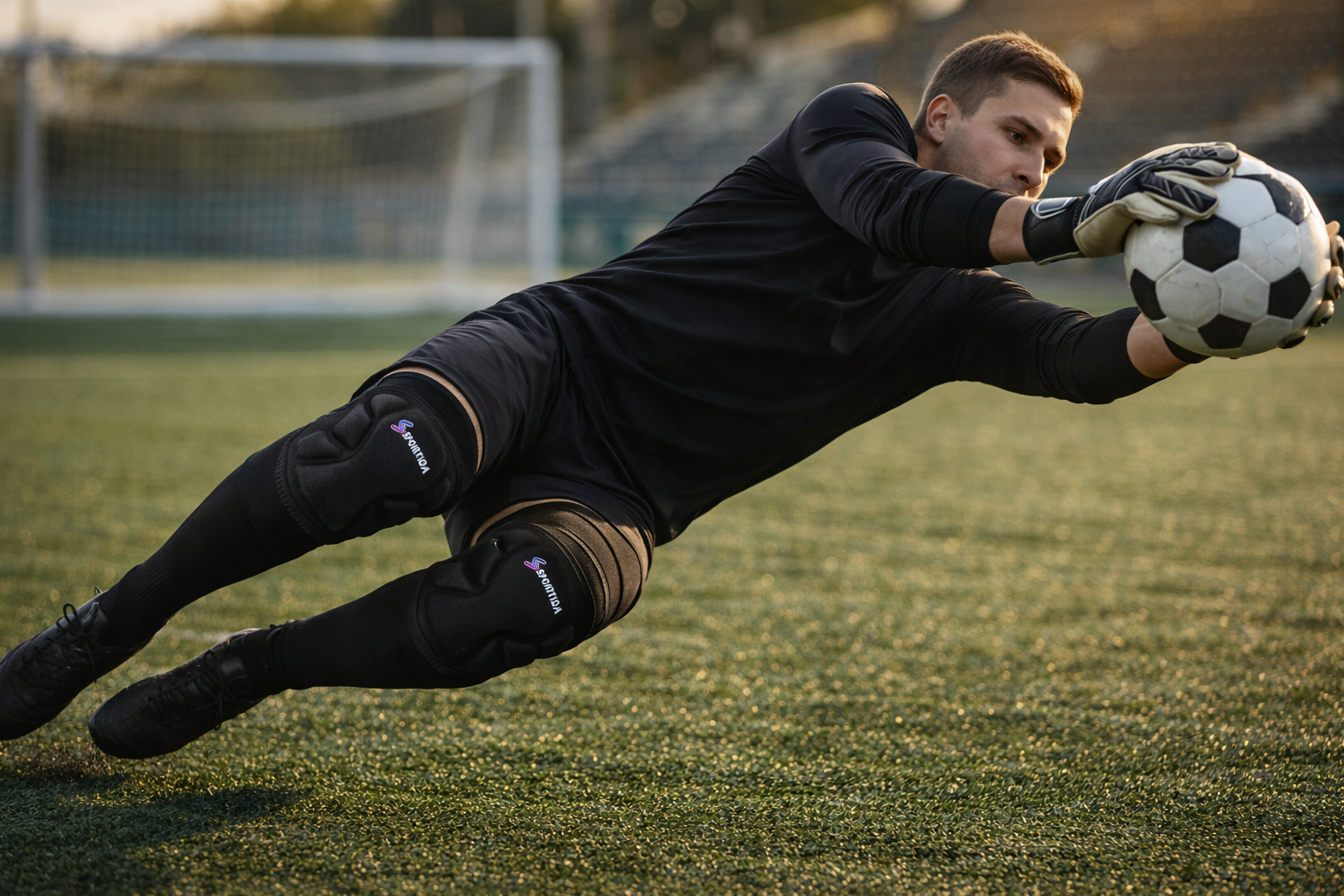
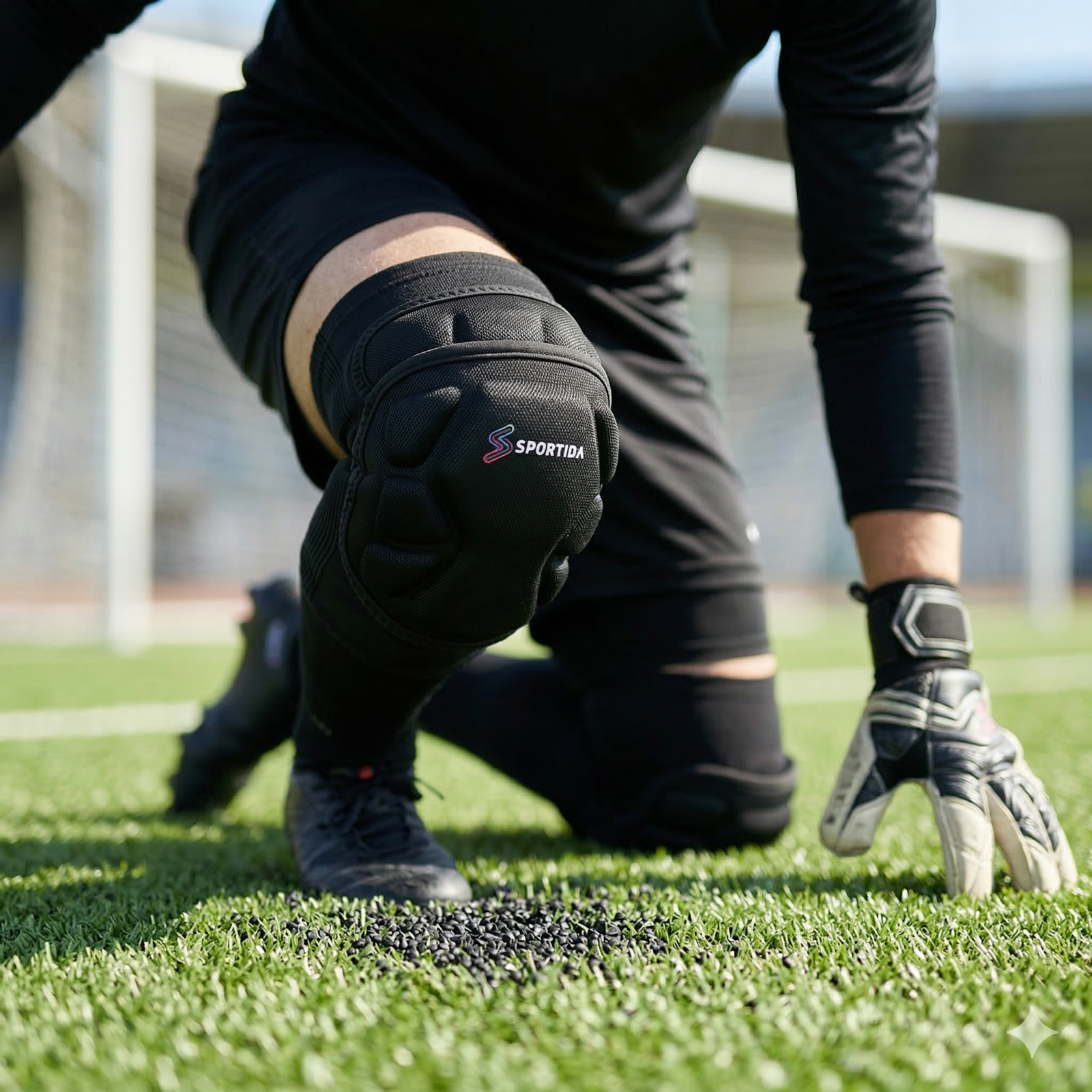
artificial turf rubber infill close-up with goalkeeper knee contact

The Hard Reality of Artificial Turf

Artificial turf has changed the game, but it comes with a cost. Unlike natural grass, turf surfaces create significantly more friction. The combination of synthetic blades and rubber infill is highly abrasive, leading to the common and painful problem of "turf burn" during slides.

For a goalkeeper, repeated knee contact during training drills and diving saves on this surface can cause discomfort and skin abrasions, impacting performance and confidence. This is why goalkeeper knee protection is becoming increasingly important.
What Happens When Goalkeepers Hit the Ground

The biomechanics of a diving save often involve the knee being one of the first points of contact with the ground. Over a single training session, this can mean dozens of impacts.

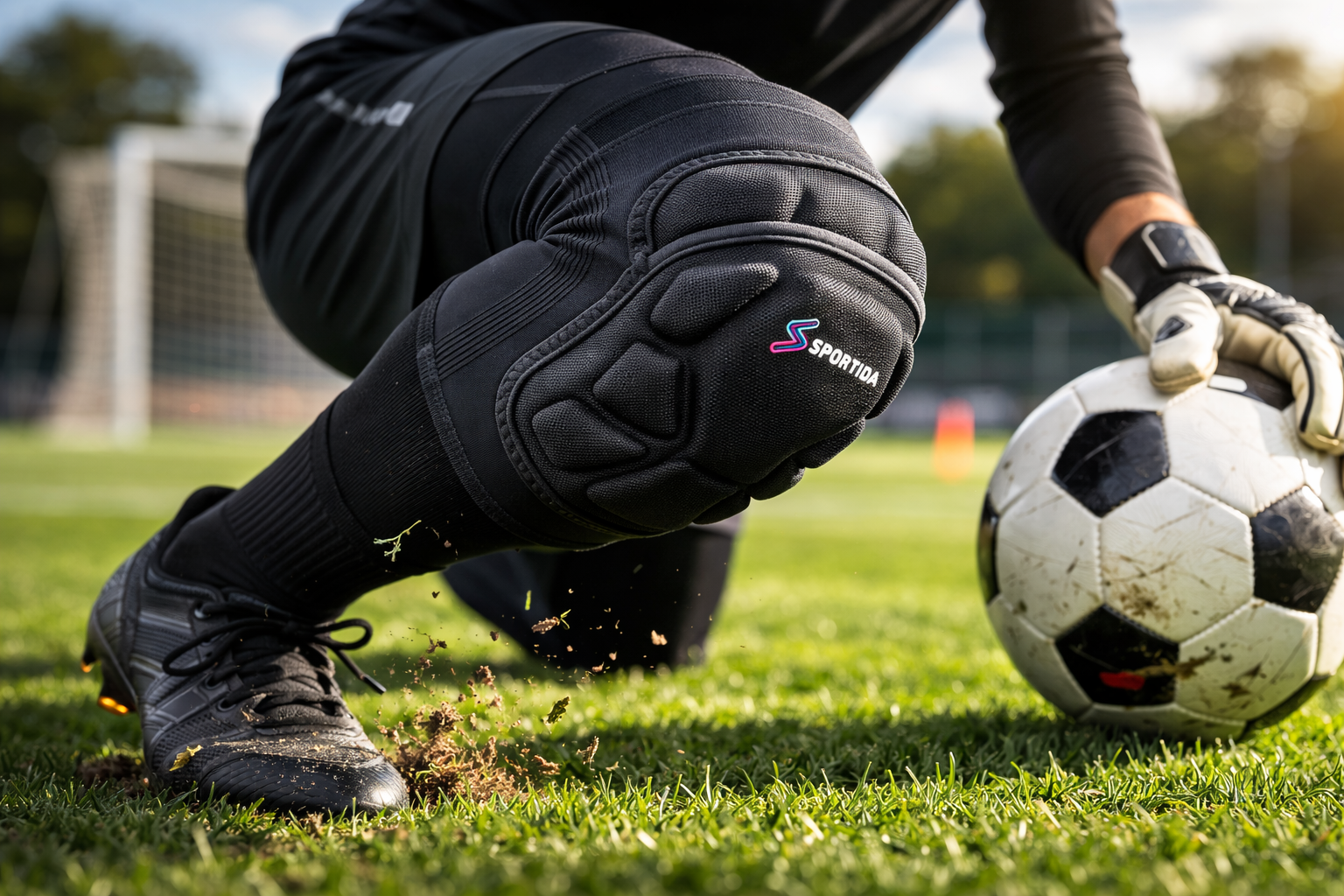
This repetitive, low-to-medium level impact, combined with the compression and friction of a slide, places consistent stress on the knee joint and surrounding skin. Soccer goalkeeper knee pads are designed to cushion this exact scenario, offering crucial knee protection for soccer goalkeepers.

goalkeeper knee pad absorbing impact during turf contact
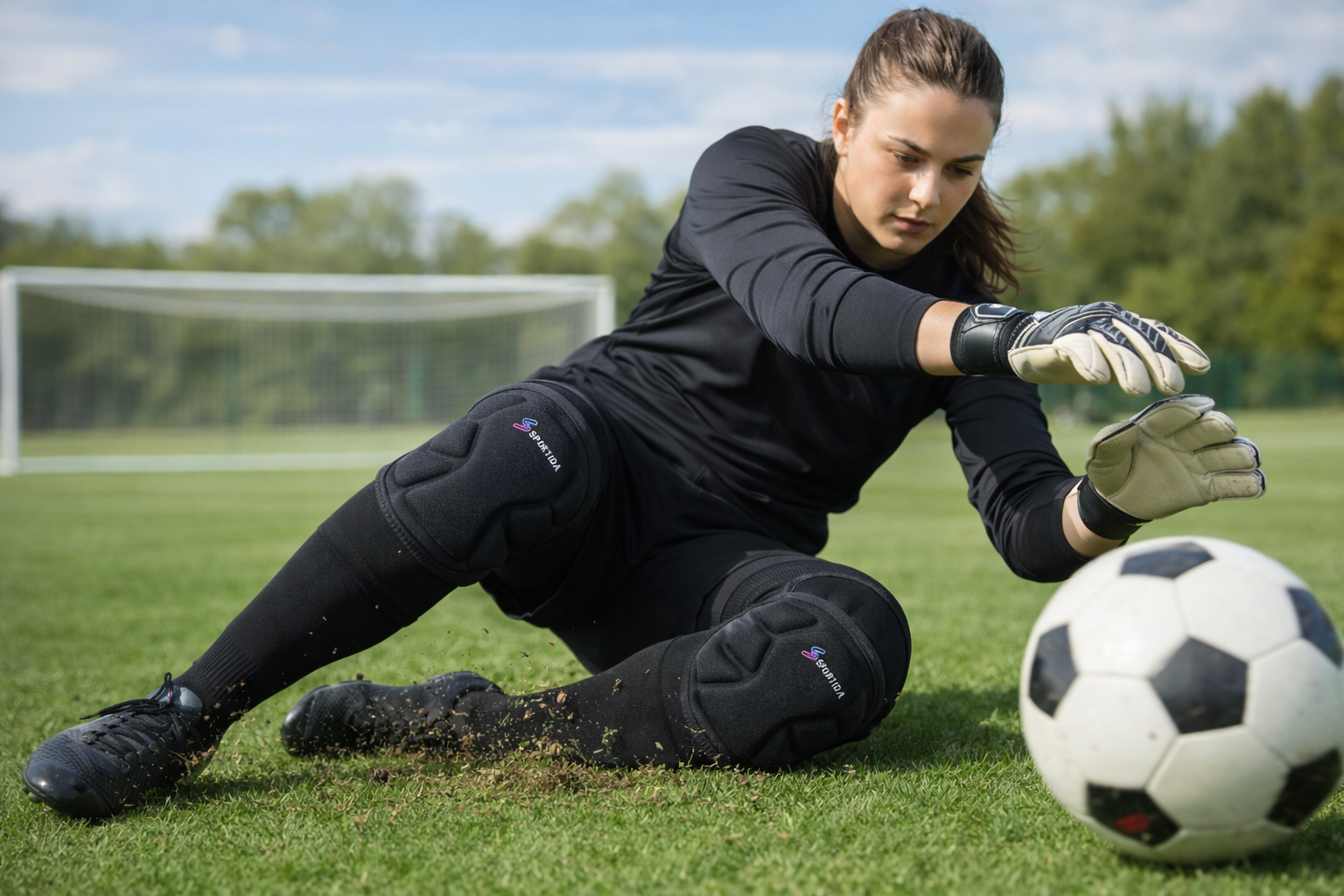
female soccer goalkeeper training with knee pads on turf

Freedom of Movement vs. Protection

A common question is: do knee pads slow goalkeepers down? In the past, bulky pads could restrict movement. However, modern knee protection for soccer goalkeepers is engineered differently.

The goal is to provide targeted protection against impact and friction without hindering agility. This is achieved with lightweight materials and flexible designs, like those using a segmented padding system that moves with the athlete, ensuring goalkeepers maintain full mobility.

Why Segmented Knee Protection Matters

Instead of a single, rigid block of foam, segmented EVA padding uses multiple, smaller ergonomic panels. This design allows the pad to flex and conform to the knee's natural bending motion during a dive, sprint, or recovery, providing flexible fit for movement.

Knee pads like the Sportida S6764 use this ergonomic multi-panel protection with segmented EVA padding. Paired with a breathable compression sleeve, the pad stays securely in place, offering reliable protection against surface contact and sliding impact without the bulk that restricts mobility. It's protection that works with you, not against you, and is specifically designed for sliding and surface contact.

Frequently Asked Questions

Are knee pads allowed in professional soccer?

Yes, soccer's laws of the game permit soft, lightweight protective gear like knee pads, as long as they are not dangerous to the player or others. They are commonly used in training environments.

Do knee pads restrict a goalkeeper's movement?

While bulky, old-style pads could, modern goalkeeper knee pads are designed to be lightweight and flexible. Designs with segmented padding and compression sleeves offer protection without limiting mobility for dives and quick recoveries.

Why do goalkeepers get turf burns?

Turf burns are abrasions caused by friction when skin slides against artificial turf surfaces. The combination of plastic grass blades and rubber infill creates a high-friction environment, especially during sliding saves.

What surfaces are hardest on goalkeeper knees?

Artificial turf and older, hard-packed grass fields are typically the toughest on a goalkeeper's knees due to increased friction and impact force. Indoor courts for futsal are also very demanding.

What type of knee pads are best for soccer goalkeepers?

The best soccer goalkeeper knee pads are lightweight, flexible, and offer targeted impact absorption. Look for slip-on designs with segmented EVA padding that move with the knee and a breathable compression sleeve to keep them securely in place.