knee pad absorbing impact during skateboard fall on concrete

Hard Surfaces and Impact Risk

Sports like skateboarding, wrestling, and high-repetition training drills place the knees in direct contact with hard surfaces. Concrete parks, gym floors, and wrestling mats can all create repeated impact points that accumulate stress over time.

Even when a single impact seems minor, repeated contact across sessions can lead to joint soreness and reduced training quality. Reliable knee protection helps absorb force and supports consistent performance in high-contact practice. For soccer-specific use, see these goalie knee pads for training.

Sliding Friction and Skin Damage

Sliding movement is part of many disciplines, from skatepark transitions to wrestling scrambles. When knees travel across abrasive surfaces, friction can quickly irritate skin and produce abrasion patterns similar to turf-burn style contact injuries.

Repetitive sliding friction does not only affect skin comfort. It can also disrupt technique and confidence, especially during longer sessions. Proper knee pads create a protective layer that reduces direct surface friction and helps athletes stay focused.

Mobility vs Protection in Modern Knee Pads

Effective knee protection is not just about adding thick padding. Modern knee pads are designed to protect without limiting movement, so athletes can pivot, shoot, slide, and recover naturally.

Compression sleeve construction and ergonomic shaping help keep pads stable during dynamic motion while maintaining comfort. This balance is essential for sports where speed, control, and flexibility matter in every repetition.

wrestlers training with knee pads during grappling practice
wrestling knee pad contacting mat surface close up

Why Segmented Knee Pad Design Matters

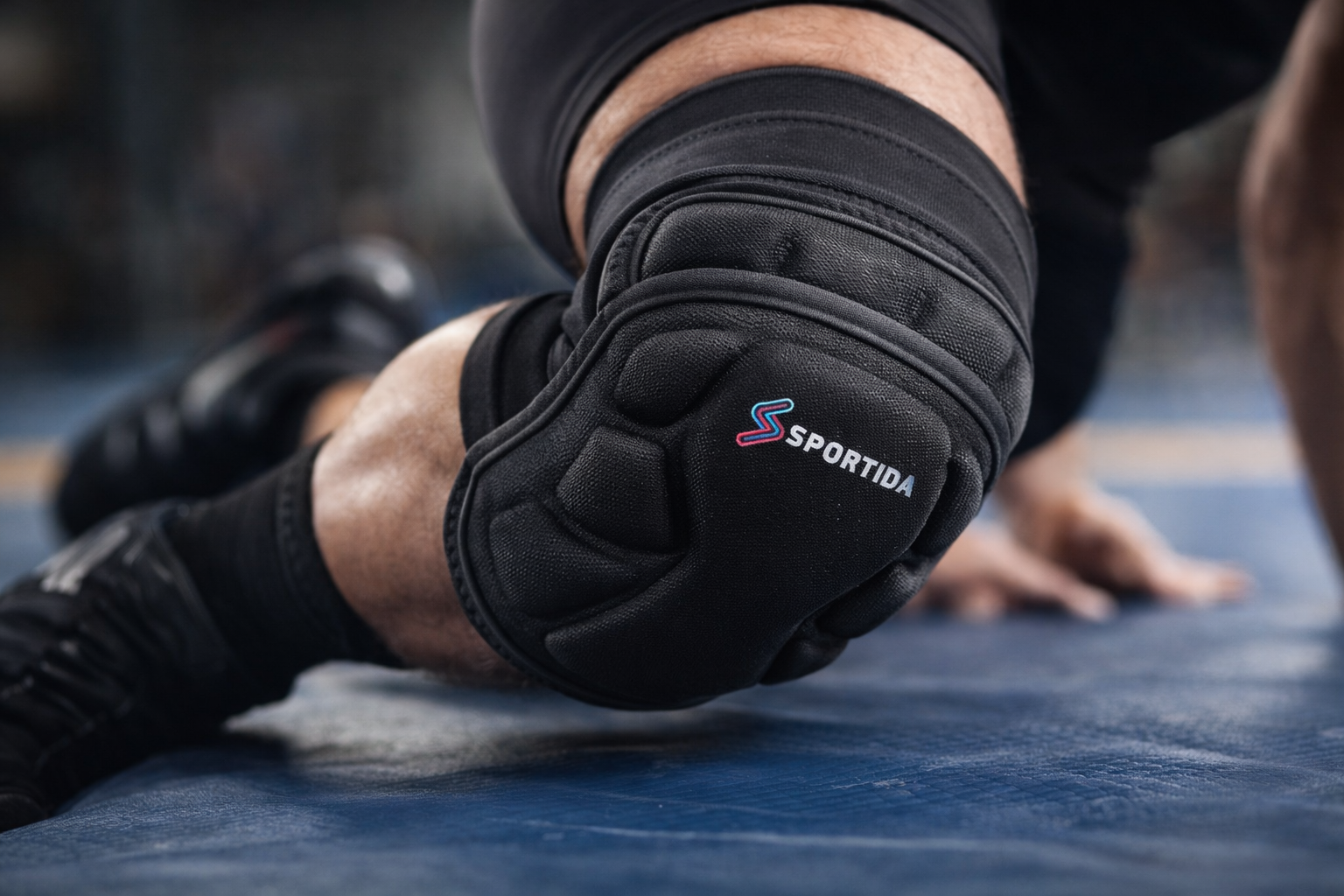
Segmented EVA foam technology improves how knee protection responds to real movement. Multiple protective zones flex with the knee, making it easier to maintain natural mechanics during sliding and impact-heavy drills.

This construction supports shock absorption, ergonomic movement, and reduced bulk compared with rigid padding blocks. The Sportida S6764 is a strong example of this approach, combining flexibility and protection for sliding sports.

Frequently Asked Questions

Are knee pads necessary for skateboarding?

Knee pads are strongly recommended for skateboarding because falls and slides on concrete can create direct impact and abrasion. Proper protection helps reduce injury risk and supports safer progression.

Why do wrestlers wear knee pads?

Wrestlers wear knee pads to reduce stress from repeated mat contact, kneeling, and explosive transitions. Knee pads help protect against friction while supporting mobility during training and competition.

What sports require knee protection?

Sports with frequent sliding, surface contact, or falls often require knee protection, including skateboarding, wrestling, grappling, volleyball, and goalkeeper training on turf or hard courts.

Do knee pads prevent sliding injuries?

Knee pads can reduce sliding injury severity by lowering friction and absorbing impact during contact. While no gear eliminates all risk, quality pads are a key protective layer for repeated training.

What type of knee pads are best for sliding sports?

The best options use segmented EVA padding, breathable compression fabric, and an ergonomic fit that stays secure. This combination helps deliver impact protection without restricting movement.